Berlin Reuse Pilot
Making reusable takeaway packaging simple, scalable and convenient
Making reusable takeaway packaging simple, scalable and convenient

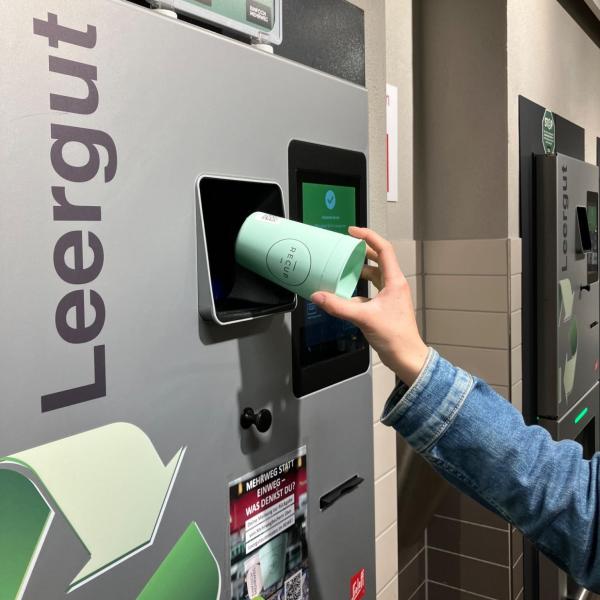
Across Berlin, a new pilot project is testing how reusable takeaway cups can be returned just as easily as deposit bottles in supermarkets.
Image credit: Deutsche Umwelthilfe
The film introduces the Berlin reuse pilot, explains how the system works, and shares early insights from partners and customers.
Each year, billions of single-use cups are thrown away in Europe. As companies prepare for the 2028 EU reuse requirements, practical and scalable solutions are increasingly needed.
The Berlin reuse pilot explores how to make reusable takeaway packaging convenient for everyday use. As part of this project, we link cafés, restaurants and supermarkets across the district of Friedrichshain-Kreuzberg, allowing customers to return reusable cups at participating REWE stores using reverse vending machines.
The pilot is a collaboration between DUH, REWE, Recup, Einfach Mehrweg, Tomra, Sielaff, Sykell, Profimiet, the city of Berlin and EDF Europe. Together, the partners connect retail, technology and logistics to demonstrate how a simple, user-friendly return system can work at scale.
Berlin provides an ideal test environment: the district already has a high density of Recup partner cafés, and consumers are familiar with returning bottles at supermarket deposit machines.
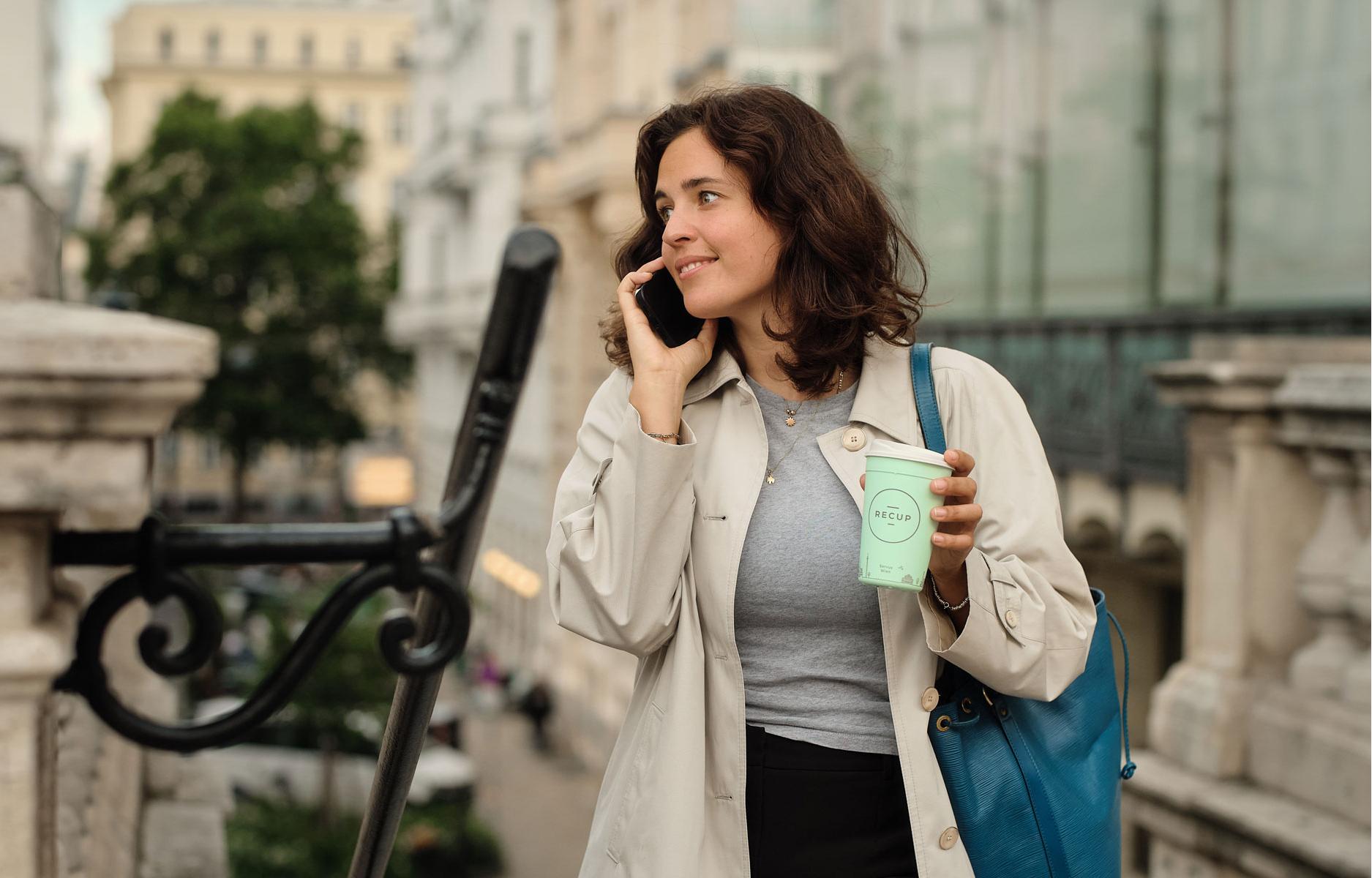
Image credit: Copyright Julian Scholl, 2024
Customers pick up a reusable cup at cafés and restaurants using the Recup or the Einfach Mehrweg system.
The same cup can be returned at selected REWE supermarkets additionally to the partner network of cafés and restaurants. Reverse vending machines recognise the serialised cup and register the deposit instantly.
Cups are collected, cleaned and redistributed through the partners, creating a closed and efficient loop.
Surveys show that customers value return options that fit into daily routines. Returning cups during normal grocery shopping removes a major barrier to reuse.
By using technology already in place in supermarkets, the system could be expanded quickly across thousands of locations in Germany.
These early findings provide a strong basis for expanding reuse systems to additional cities and retailers.
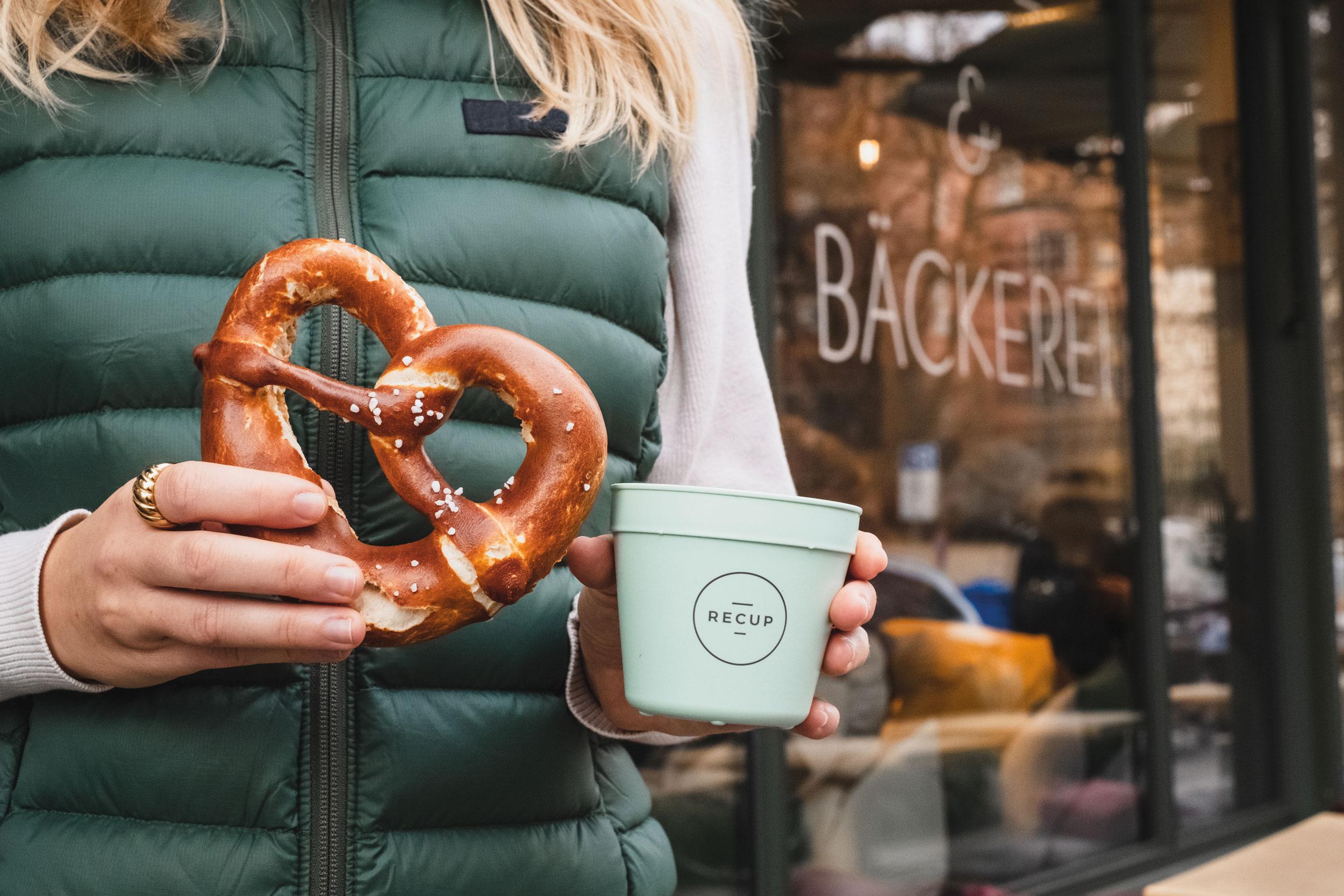
Image credit: Copyright Recup GmbH, 2022